
Microsoft
Empowering Fifth Graders: Creating a Braille Tool that Impresses Microsoft Teacher

Empowering Fifth Graders to Create Accessibility Tool Using AI
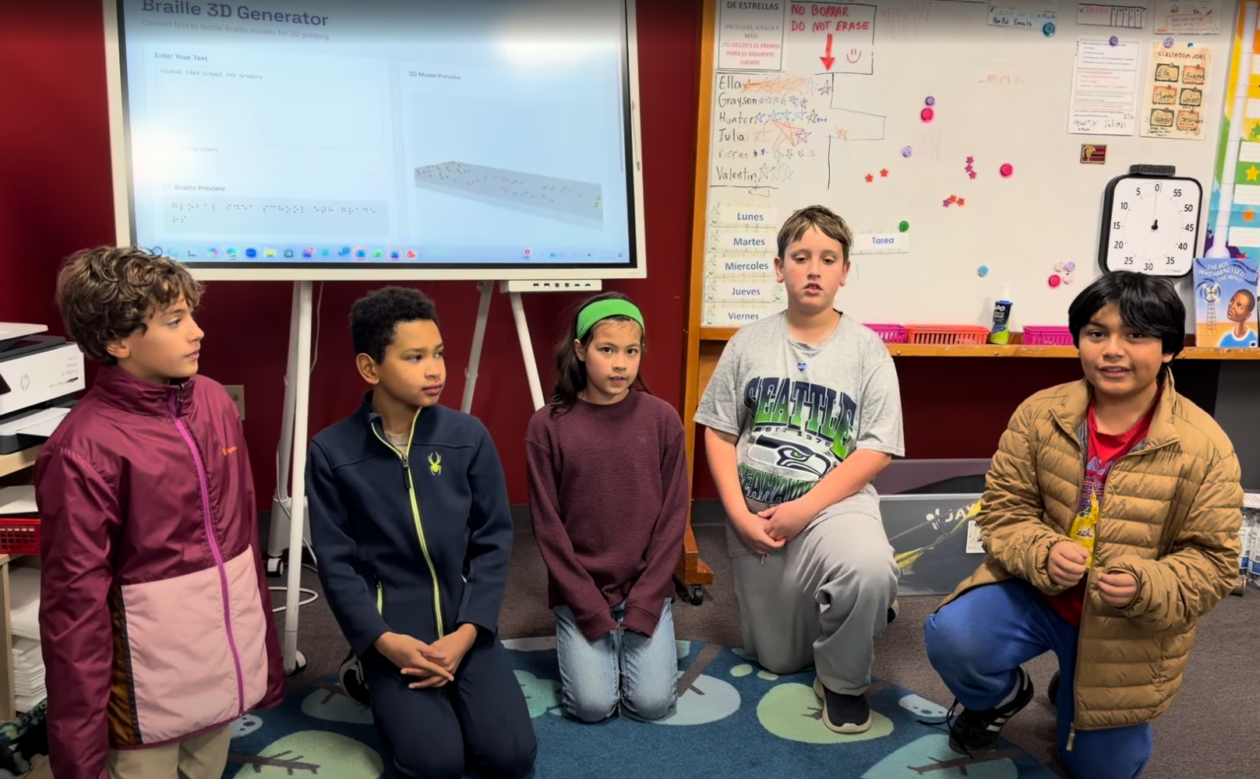
Microsoft’s AI for Good Lab, led by Juan Lavista Ferres, usually focuses on building AI solutions, but recently, fifth graders at Global Idea School in Redmond, Wash., took on a unique project. They developed an accessibility tool in their computer science class.
The students at the independent, non-profit elementary school learned vibe coding using GitHub Spark and successfully created a Braille 3D Generator. This tool can quickly convert text into printable 3D Braille models, aiding those with visual impairments.

Juan Lavista Ferres, a Microsoft veteran and head of the AI for Good Lab, expressed astonishment at the students’ accomplishment. Despite minimal training, these young minds created a viable solution that can benefit the visually impaired community.
Inspired to help individuals with visual impairments navigate their school environment, six students collaborated on the Braille 3D Generator. Their innovative project led them to participate in the “AI for a Better World” competition, organized in partnership with MIT.
During the development process, the students sought guidance from Anne Taylor, a principal program manager at Microsoft Accessibility. Taylor’s expertise in Braille embossers proved invaluable in refining the tool to ensure its effectiveness for the blind.
Additionally, the students visited Microsoft’s Inclusive Tech Lab, where they observed how specialized technology assists individuals with disabilities in various tasks.

The students’ experience with vibe coding, a simplified approach to software development, was a departure from traditional coding methods. By using GitHub Spark, they could generate code for web applications through natural language prompts, eliminating the need for coding expertise.
Lavista Ferres noted the students’ transition from browser-based applications to physical creations as a remarkable achievement. Their ability to transform ideas into tangible 3D models showcased the power of AI technology in their educational journey.
Having joined Microsoft as a data scientist and later becoming a lab director, Lavista Ferres emphasized the significance of the students’ practical solutions. He envisions them as potential future Microsoft employees, equipped with the skills to drive real-world impact through technology.
As the students continue to innovate and explore the possibilities of AI, their commitment to creating accessible solutions for the community underscores the importance of leveraging technology for social good.












Lost in the Living Maze: Unraveling Hidden Terrain Magic Through Copy-Paste

Samsung Unveils Exclusive Galaxy Z Fold 8 BTS Edition

Navigating the Digital World: Expert Tech Advice for Everyman

OMass Therapeutics Secures €275 Million Funding to Advance Innovative Small-Molecule Therapies

The Evolution of Apple’s Smart Home Strategy: A Closer Look at Their Own Devices

Unveiling the Imposter: The Truth Behind the Fake WhatsApp Clone on the Play Store

Digital Protection: How a 1988 Law Could Safeguard Your Online Viewing Experience

BMW Unlocks Greater Range for i7 Model Through Innovative Technology

Modern Warfare 4: The Final Chapter and the Birth of a New COD Legacy

EU Takes Action Against Instagram and Facebook for Violating Illegal Content Rules

Warning: Facebook Creators Face Monetization Loss for Stealing and Reposting Videos

Facebook’s New Look: A Blend of Instagram’s Style

Facebook Compliance: ICE-tracking Page Removed After US Government Intervention

Facebook and Instagram to Reduce Personalized Ads for European Users

InstaDub: Meta’s AI Translation Tool for Instagram Videos

Reclaim Your Account: Facebook and Instagram Launch New Hub for Account Recovery

Meta discontinues Messenger apps for Windows and macOS

Breaking Updates: Meta Connect 2025 Unveils Latest Developments

$25,000 Gaming Setup – EVOLUTION!

The Maze Alpha X is HERE!

Cool Tech under $100 – December!

MYSTERY UNBOXING FROM GOOGLE!

TOP 6 Smartphones from Companies you NEVER Expected!

A Surprise Smartphone from EE!

DOOGEE MIX 2 VS DOOGEE MIX 1!

INCREDIBLE Smartphone Gadgets on Amazon!

10 Android Apps you NEED to try in 2017 / 2018
-
 Facebook12 months ago
EU Takes Action Against Instagram and Facebook for Violating Illegal Content Rules
-
 Facebook1 year ago
Warning: Facebook Creators Face Monetization Loss for Stealing and Reposting Videos
-
 Facebook10 months ago
Facebook’s New Look: A Blend of Instagram’s Style
-
 Facebook1 year ago
Facebook Compliance: ICE-tracking Page Removed After US Government Intervention
-
 Facebook10 months ago
Facebook and Instagram to Reduce Personalized Ads for European Users
-
 Facebook1 year ago
InstaDub: Meta’s AI Translation Tool for Instagram Videos
-
 Facebook11 months ago
Reclaim Your Account: Facebook and Instagram Launch New Hub for Account Recovery
-
 Apple12 months ago
Meta discontinues Messenger apps for Windows and macOS
